ed tech + innovation

Category: EDCI 336 (page 1 of 3)

This is a category for the EdTech course. Please add this category in addition to the relevant edtech assignment category(ies).

Google Classroom

Our presentation featured Google Classroom, as we felt we wanted a better understanding of the technology before entering schools as TOCs. I have seen it in use often at my link-to-practice, and loved the way it was used in the digital media classrooms. The students were given pages that they could customize like a webpage, and part of their introductory week was to set up about me pages featuring the music they like, and artwork that inspires them. It felt practical and I like that it gave the teacher insight into their personalities.
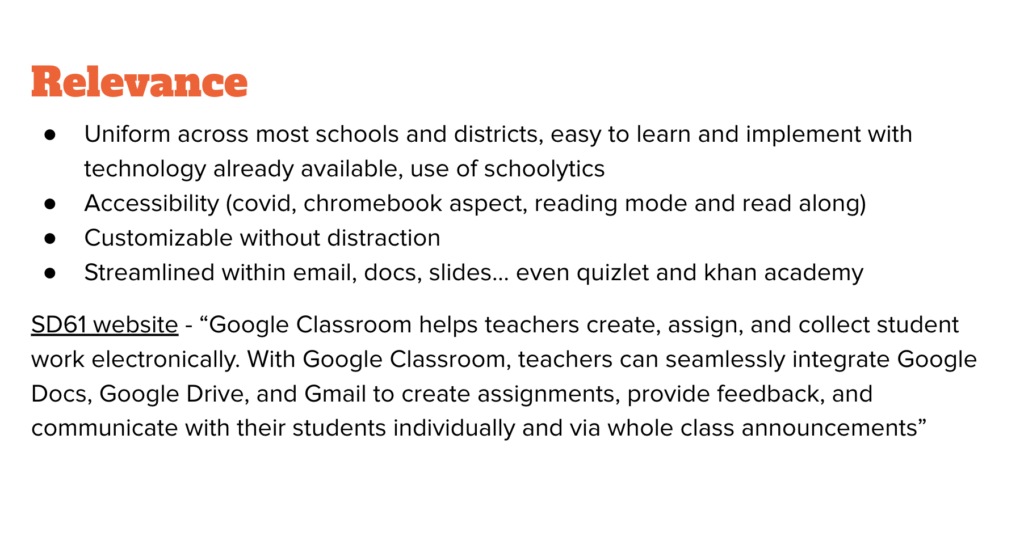
How do benefits of convenience outweigh the risk of student privacy? This feels very twisty to me, as there are legitimate concerns for privacy and informed consent through using the service, but other than not partaking (losing out on a massive convenience) there isn’t tons you can do on an individual level, especially when chromebooks are so prevalent in schools. While it may not be my number one issue as an art teacher, I sympathize with teachers who will have to/want to consider alternatives. Hanna brought up a really interesting technology now in use in California in the Montessori schools, that originated in Kelowna (like club penguin 🙂 ) that is no longer available to all teachers, which is too bad. The benefits are really clear though, the streamlined platform incorporating slides, docs, and email, while parents can be notified so easily does make our jobs easier. I was also interested in the reading comprehension tech that has been developed, and the schoolytics platform.

As Roxanne said, the age this should be used is 14 and up, and I think that it is appropriate at the high school level. However, I’m unsure as to how I would proceed if not all the students in my class weren’t allowed to use it. Especially when it comes to accessibility outside of the classroom. It seems as if SD61 is very supportive of this application, and has many useful videos available on the district’s website. I checked some of them out in my research and found them helpful and streamlined.
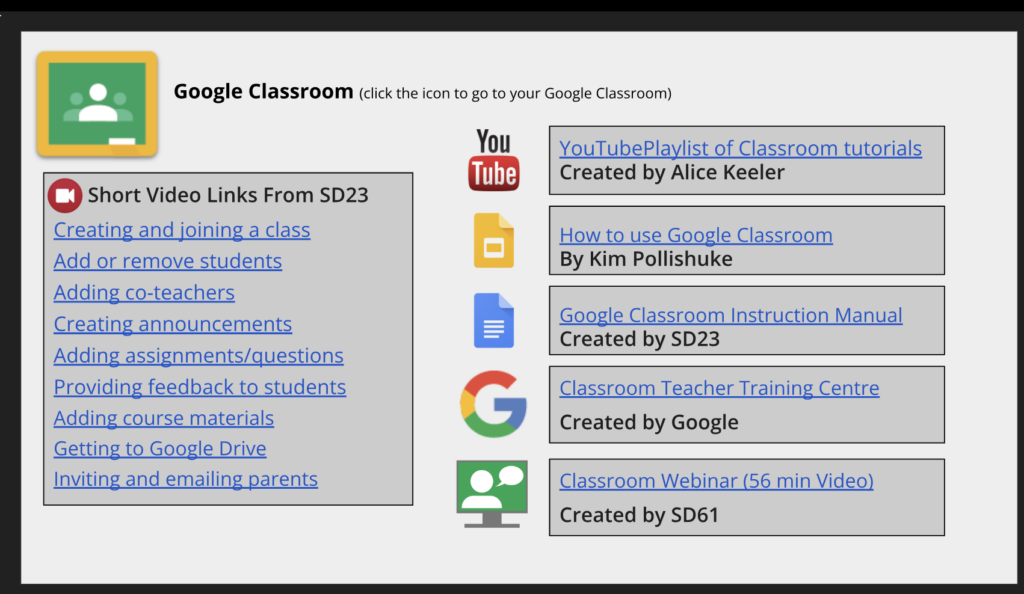
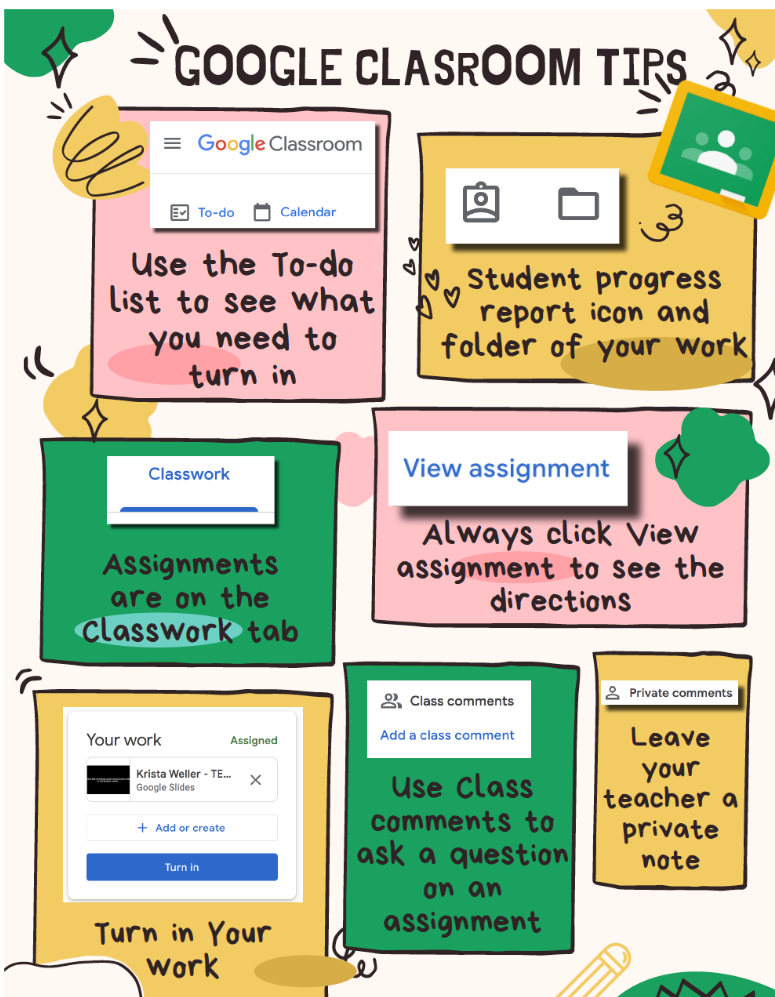
My involvement in the process was similar to the others, we all divided the slides and had two meetings to discuss the presentation beforehand. Some of the topics seemed fairly similar, but I think that relevancy and benefits are similar regardless. Our group felt supportive, and I enjoyed working with everyone. I think the conversations about google classroom may have been more conducive to learning than the presentation was. All of us were responsible for a slide and topic, and we researched accordingly. I particularly liked the Alice Keeler resource, as she seems super familiar with the technology and has made infographics for teens using the platform for the first time.
Weekly Reflection – 12

Final Reflection from Presentations – Mindmeister

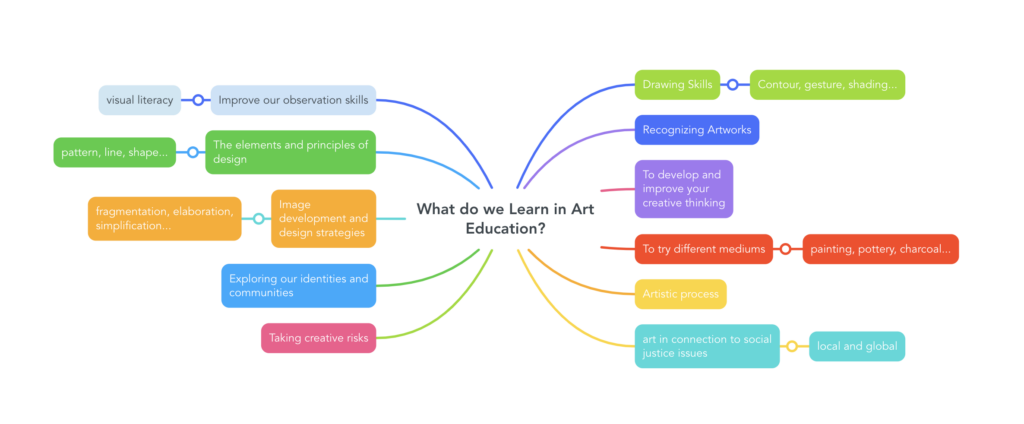
I want to focus on mindmeister, as I see myself using this technology the most out of any we were presented this week. I love brainstorming and mind-mapping for myself, and I found this site offered a streamlined and simple but effective tool I could use with students. The obvious disadvantage would be the fact there is a paid version, but as I have uploaded, I just took a screenshot of what I made. It would be a bit frustrating starting from scratch or losing a copy over time, but I think for simple lessons or getting ideas down as a group this would work just fine. I would love to know how other artists use this or plan on using the tool, as my art education map was only the first idea that came to mind. I think a benefit would be it is more permanent than just writing out ideas on the board, I could screenshot this and upload to google classroom for example. While I have come to understand this term that no one person is a visual/kinaesthetic/auditory learner, but that we all need all different types of instruction to succeed, I think I do prefer a visual, especially a slightly colourful one, and I like that it is interactive without becoming a distraction.

Here is my mind map, and the inspiration I found on pinterest from Julia Stubbs . I think the mindmeister example is much more engaging, and you can organize new ideas into it if need be. I think in creating something like this, students can see more clearly the outcomes and goals as something more interconnected than just a list from the curriculum website. I also want students to have the opportunity to tell me what they want to learn, as that is valuable information that will help me when building unit plans and what we cover during the term. Art can have a lot of choice, as long as there is direction!

Free Inquiry – 10

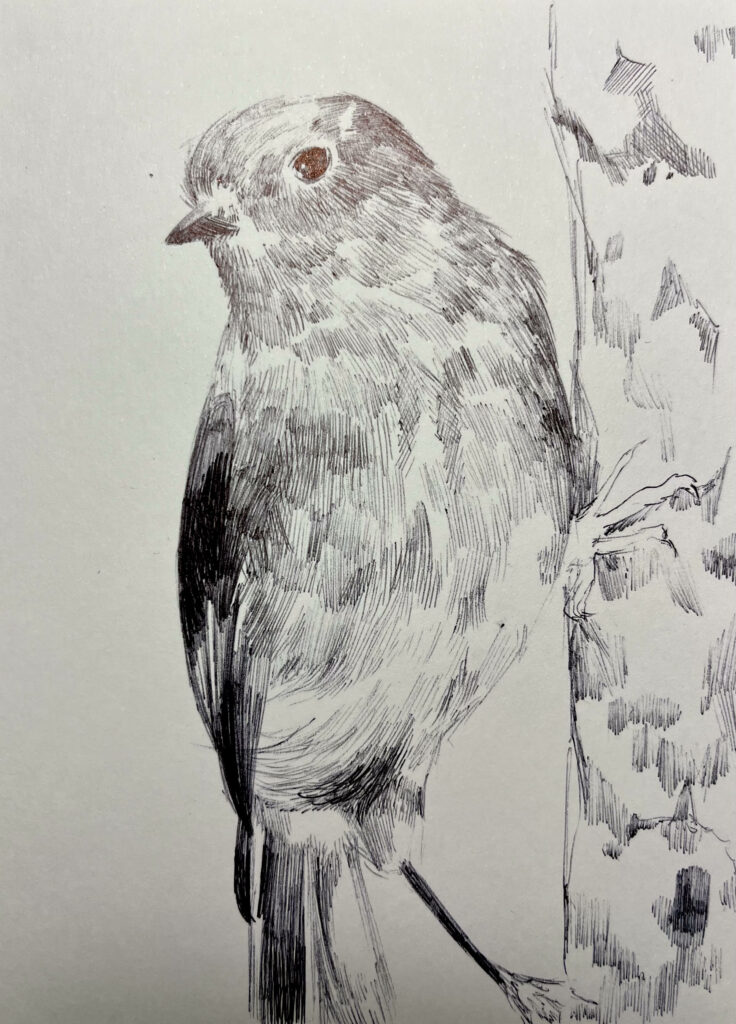
All done, and considering my little studio room is still out of operation, I went for simple this week. I watched a great video for my link-to-practice inquiry about embracing limitations, and how that can get people thinking creatively. I think limiting my drawing really benefits me on occasions, as I can relax a bit and focus on line making over quality of colour, for example. I drew the New Zealand Robin with a ball point pen, inspired by Neva Hosking’s artwork. I have been following her for 8 or so years now, and find her work very inspired by life and so detailed. She often works with ball point pen. The bird eats small bugs found among leaves, and usually is found in the forest. It is also known to distract prey from its young by performing and dancing around.

I think students should get some opportunities to work with permanent mediums, even if it is just a ball point pen. I don’t think you need anything fancy to get started, and while most of my art supplies are not inexpensive, pen is definitely accessible. I also love the idea of permanence, and I think having to move on and move around mistakes can be really beneficial. It can be a bit paralyzing sitting down to make artwork when you have too much as far as supplies go, like Phil says in the video. Sometimes it is best to start small and see where it takes you. Neva has made an entire career (a successful one) out of pencil and pen drawings on often times scrap paper. I think that should inspire students to just start!

I am giving this one to my new neighbour downstairs who happens to be my boyfriend’s brother.

Free Inquiry – 9

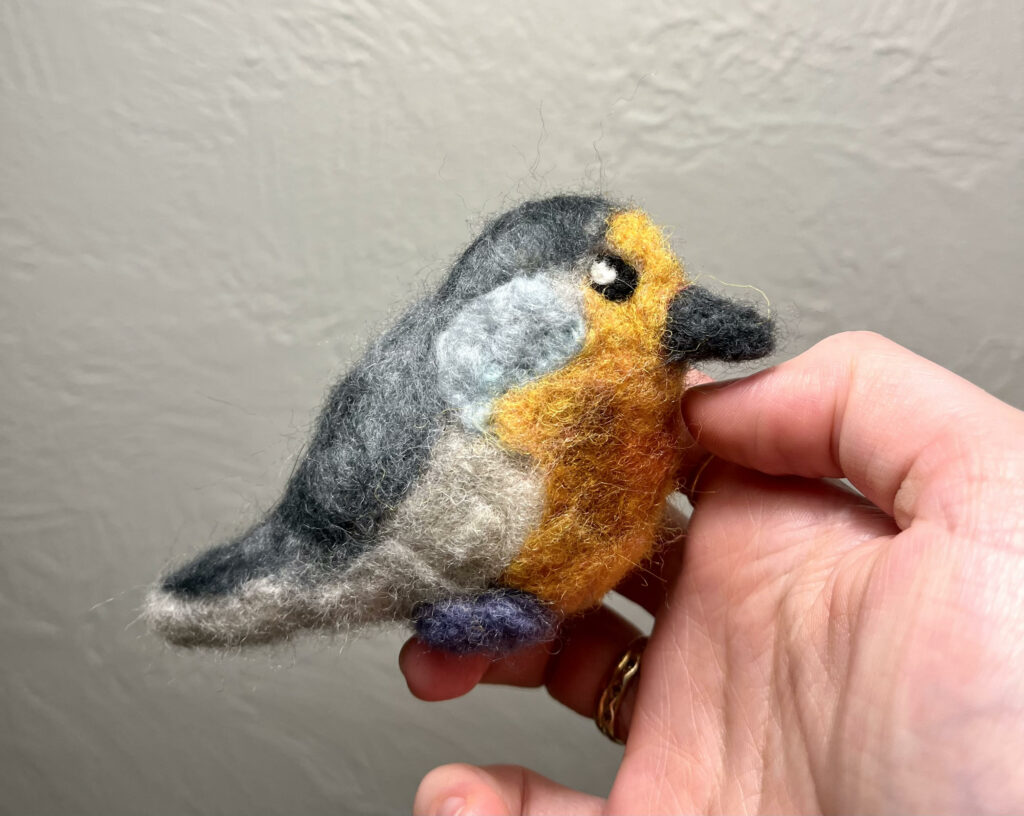
My favourite bird, the European Robin! I decided I couldn’t possibly paint it again, but wanted to represent it somehow. I always get my needle felting out around the holidays for little ornaments as it feels like a cozy thing to work on. I had all the colours I needed to work on it, and it always takes less time than I think I need. Both male and females have similar colouring, featuring the bold orangey throat and belly. While they look very sweet, they can be very aggressive and territorial. They live predominantly in gardens, eating mainly insects. They are also very skilled at hiding nests, especially when nesting around humans.

Needle Felting

Needle felting is super fun to do with kids, even if it is much more abstract than a bird. The only issues that arise are poking yourself and having the needle break if they aren’t using them correctly. I have a lovely stash of roving from Knotty by Nature, which is an amazing local textile store that is also keen to give helpful advice. One thing I notice kids struggle with is pulling the roving apart, usually choosing to try tearing it when it easily comes away by pulling lightly more vertically. One thing I’d love to try, is using squares of felt for mouse ears, or tiny sewn clothing, as well as beads for eyes instead of roving. As long as students are adequately poking, the end result is often really great, and I have made many totoros and mushrooms with the kids at work. I find felting a pretty low mess situation, and other than the roving the supplies are very affordable as all you really need is a needle and thick foam block .

I’m going to give this one as a little Christmas present, likely to my grandma as she likes little pieces like this (especially birds).

Weekly Reflection – 10

I want to focus on plagiarism and how to avoid it in education, but I think it really boils down to seeing AI as a tool. I like the idea of steering away from homework, and being able to supervise students in the classroom while they complete their work, as well as keeping the prompts and questions personal enough that it would be more difficult to have chatgpt write the response. I also want to ensure I am checking in often and giving feedback, hopefully leading to students asking questions if they feel stuck. As art is my teachable, I’m not sure I’ll see too many issues arise, as I don’t have much happening online, more in a visual journal which is often filled out in class and of a personal nature. I do want to give adequate instruction on coming up with projects, or creating interesting prompts that students want to connect with to try and avoid seeing pinterest copying, but if it is just for fun or practice I don’t see an issue with it if it is just influencing the final work. I have been using chatgpt to help me come up with titles for my unit plans, as our teacher was looking for catchy titles, something I struggle with! I found it did a great job of coming up with ideas that were appropriate for both pottery and printmaking.

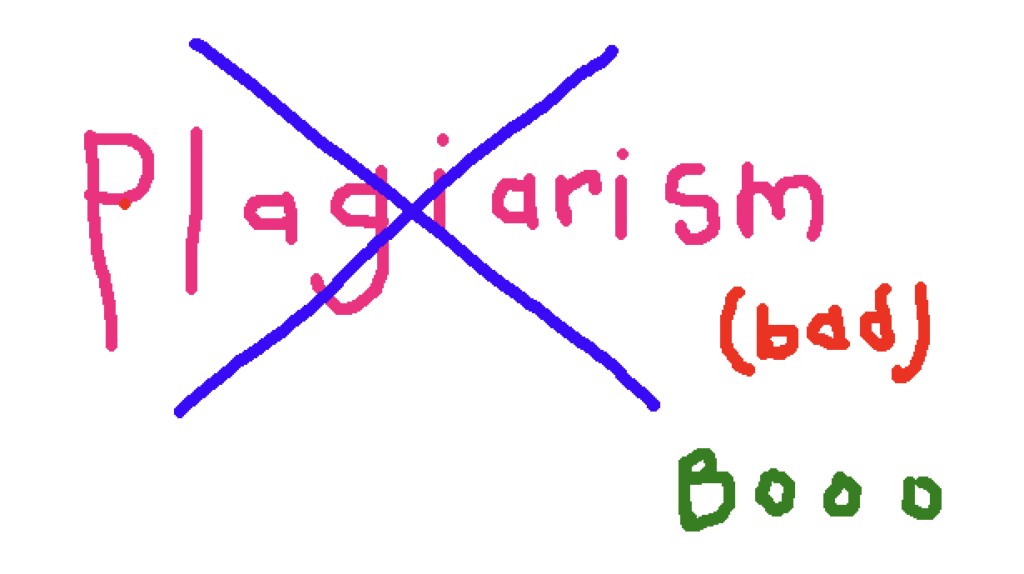
I was looking for a photo to use on unsplash and typed in “plagiarism”, which did not yield any helpful results. Here is a photo I created on a microsoft paint application online instead:

Free Inquiry – 8

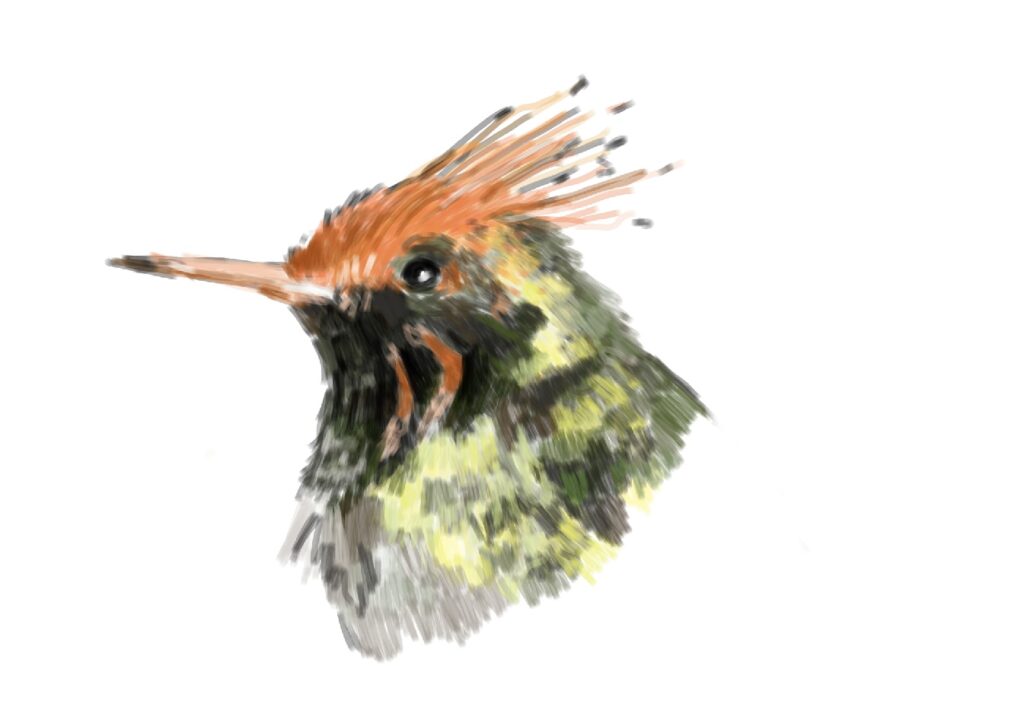
Here is the iPad painting done in the app Brushes Redux, the app David Hockney uses for his many digital paintings. I wanted to try something unfamiliar, as Procreate is something I know much more in depth. I am very inspired by David Hockney’s work, and favour his bright colours and flat application of paint. I also appreciate that he tried something new, despite his age, and it paid off as he created some very interesting and beautiful work. Here is a link to his digital work. I also want to note I was not able to use my studio room this week/lately as my partner is taking apart and building bikes in the space and things are not as they usually are. This application was much less intuitive than procreate, and I don’t believe it has been updated in some time (it was free though!). I did like the microsoft paint vibe it had, as that was something I considered when choosing what medium to use this week. I will note, the painting looks much more blurry after downloading it than it did in the app.

I painted the Rufous-crested Coquette this week, a small and distinct bird found in the Andes mountains in South America, although it is only seen very rarely. It is a quick hunter, catching large insects in flight, and also feasts on nectar. It is a type of hummingbird. I personally love drawing hummingbirds, and I like the more subdued colours of its body compared to some of our local hummingbirds like the Anna’s.

As there is no physical card this week, I sent the photo over email to Cal (who gave me the book) as I have not seen him lately in Cook Street Village.

WEEKLY REFLECTION – 9

AI in education seems like it will end up being crucial for lesson planning. I am excited to try out Magic School AI, and I really liked their rubric creator as this is not something I feel particularly proficient in and can use to build some confidence. This topic clearly felt like something our professor felt passionate about and I felt inspired leaving the class.

While I may not be in this exact scenario, I find it will be valuable in general to tailor essay or written questions out to be more reflective and personal, not something easily replicable by AI. I think the technology will make for more curious students, and make more a more accessible classroom, and one managed more easily if the teacher is able to do some of the planning with help from AI. This has been stressed a lot in many of our courses, but it it obvious to check what content chatgpt or magic school has come up with before implementing it, and making tweaks as necessary to ensure it feels personal and functional within our classes. I hope many teachers will be willing to go with the flow and investigate new tech instead of resisting it and struggling to adapt. I think the run down on how AI algorithms work was interesting, although I was a bit lost I think the visual helped! As far as what else we covered in class, I want to stress how much I dislike the chat bots for larger companies, and find it so frustrating when I have an issue I know they cannot help me with. It feels so far off of where it needs to be, and I don’t know how much I’d like it if it was a stronger tool, as when I have a problem I feel more comfortable with a human being helping me out- especially when it comes to health. Even my vet office has a chat bot to answer questions before the visit.

I still feel uncomfortable with the AI art and the people it comes up with. I don’t see the vision yet and am resistant based on the shared opinion of many artists I respect.

Photo by Alvaro Reyes on Unsplash

Free Inquiry – 7

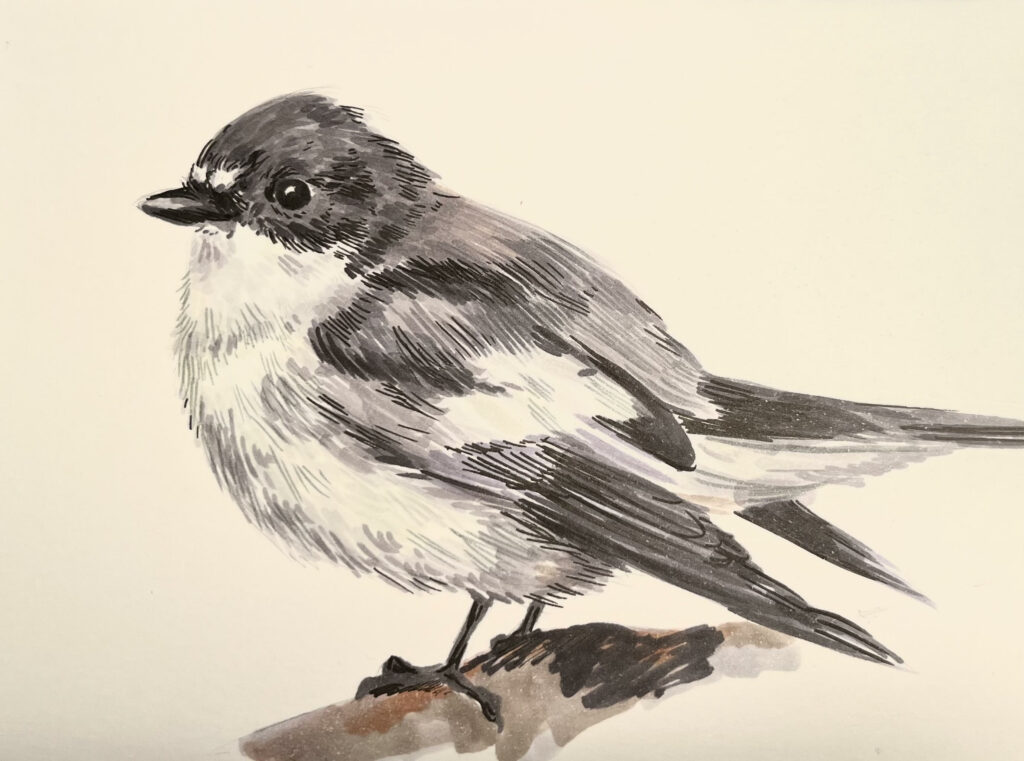
European Pied Flycatcher

This guy is more my style, the last few weeks I have struggled a bit with the final outcome and they haven’t been what I consider to be my best work. I felt like I was back on track with this bird, a little puffy and round. The EPF calls deciduous woodland home, using moss, roots, and bark to create their nests. It can lay up to 11 eggs at once, which are pale blue in colour. They are also commonly found in old holes left my woodpeckers and other types of birds.

Copic Markers

Copic markers were extremely popular when I was in high school, and I often regret the hundreds of dollars I spent on them. Once in a while I bring them out, as I like how they blend and the brighter colours (not pictured here) can be pretty fun to add to the odd composition. I think markers are a good thing to know about, as they lend themselves to a lot of genres of art that are popular amongst kids (manga and comic books). They can be great for building knowledge around colour theory, and are quick to use over paint. I have seen similar brands at my link to practice, and it is clear they are well loved. I like that it is possible to buy replacement ink for them to minimize waste. Similarly to posca pens, it is crucial to ensure students use them respectfully as the tips can be broken pretty easily with extra pressure.

As for who gets this one, I want to send it to my teacher from high school who gave me all of her resources recently! So kind of her and I feel very thankful to have her in my corner.

Weekly Reflection – 8

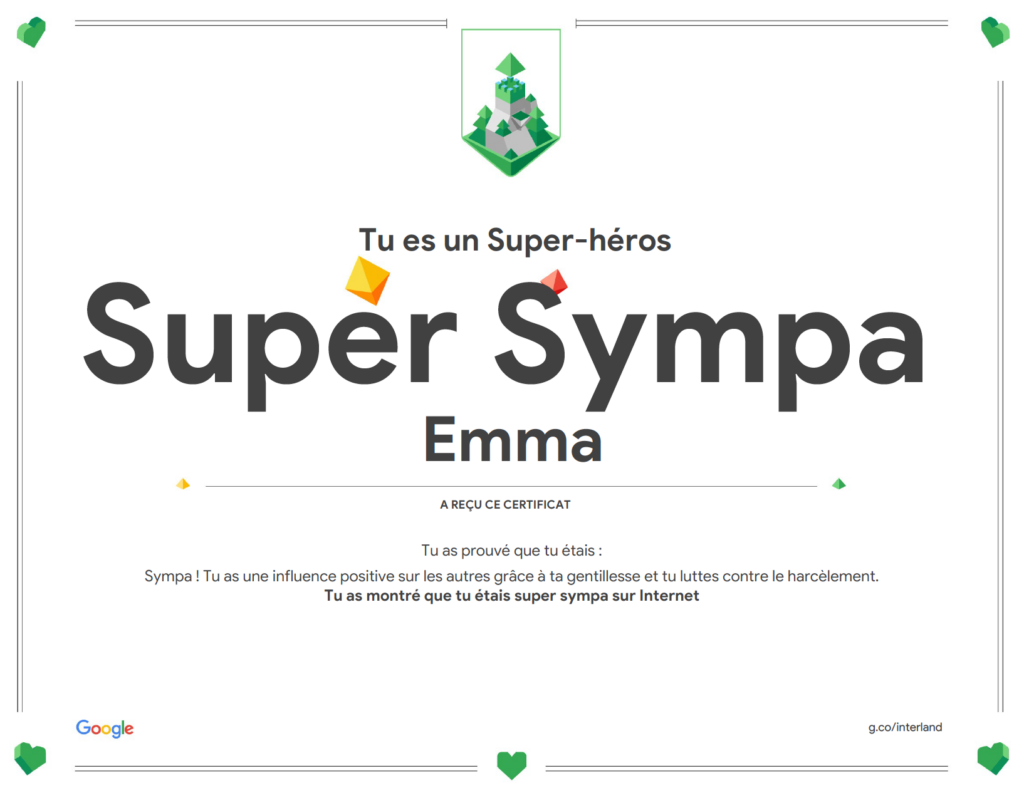
I really enjoyed the gamified internet safety walk through. I think this would be a fun thing to do with younger kids, and I got to dust off my french to try it out. The music was also very sweet and not too overwhelming! I am also curious about a specific gamified situation a peer was talking about at the beginning of term which she had used before, and I have to remember to follow up on that, I believe it was a quest situation that could unite a group of students.

Kahoot – Kahoot was not something I had played before coming to this program, and I love it. I understand it is not always appropriate, and sometimes name moderation is required, but I find the competition between my peers is really exciting and gets me more woken up at the end of the day on Wednesdays. Tech in art isn’t always super obvious or something that we can all do together, but I love the idea of making an introductory jeopardy art theory game, or kahoot situation. While it isn’t tech, I like the simple act of folding a paper into three, and having students create parts of their creatures body in a collaborative and often silly way (exquisite corpse). This is something I did from middle school all the way into an intro drawing course at University, and it unified us and got us to loosen up. Learning should be fun, and collaborative, and even exciting. When it is fun, I think mistakes matter less, as the stakes feel lower and often students are able to lose some inhibitions when they join in. I think as I’ll likely be a teacher on call for some time, I’d like to have some educational games tucked in my tool kit for an easy entry point and connection within a classroom.

Feeling good about my game win on Interland, even if it made my computer heat up and sound like it was about to take off.

Weekly Reflection – 7

I want to reflect on what I’ve learned so far when it comes to IEPs, and what we were shown at link-to-practice as I had heard the term so often in classes but hadn’t seen the physical paperwork yet. While I think that beginning to have students advocating for themselves and their learning is so crucial, I believe we should be considering a wide range of abilities to begin with while we plan our units. Art is often seen as a more accessible subject, and I would like to ensure I considering diverse learning needs, especially when I am presenting foundational art techniques, tools, and concepts. Art really is for everyone, and the room itself is often seen as a safe space. It can do wonders for mental health, and learning fine motor skills, as long as I am coming from a place of understanding and allowing for accommodations to be made. I’ve reached out for more help on this from my art teachable prof, as I’d like to hear what she recommends when it comes to creating accommodating lesson plans.

I found the conversations during class time to be really insightful, I think we are all going to be very aware of our place in ensuring we create lesson plans and spaces that can be enjoyed by all. I know I have had some difficultly in finding accommodations from the university and I will take that experience and let it inform how I interact with students. In my last reflection, I spoke about how technology over the pandemic was helpful for those who may find it challenging to be in class everyday, and I would like to implement what I have learned in this class to make my content accessible for students of diverse learning needs. As far as voice to text goes, I strongly dislike using it. I find it difficult to reflect as I speak, and text usually solves that for me. Many seniors in my life use it and love it, but I think it can be extremely frustrating for those with accents (my grandma, and my landlord both struggle with this).